Forex Trading in the USA: A Beginner’s Guide to the World’s Largest Financial Market
Learn the basics of forex trading in the USA, including how currency pairs work, the role of leverage, legal regulations, and beginner tips to start safely. A simple guide for those new to the world of forex.
Forex trading, also known as foreign exchange trading, is the process of buying and selling currencies to profit from changes in their value. It’s the largest and most liquid financial market in the world, with over $6 trillion traded daily. Unlike stock markets, forex operates 24 hours a day, five days a week, making it especially accessible for traders in the United States.
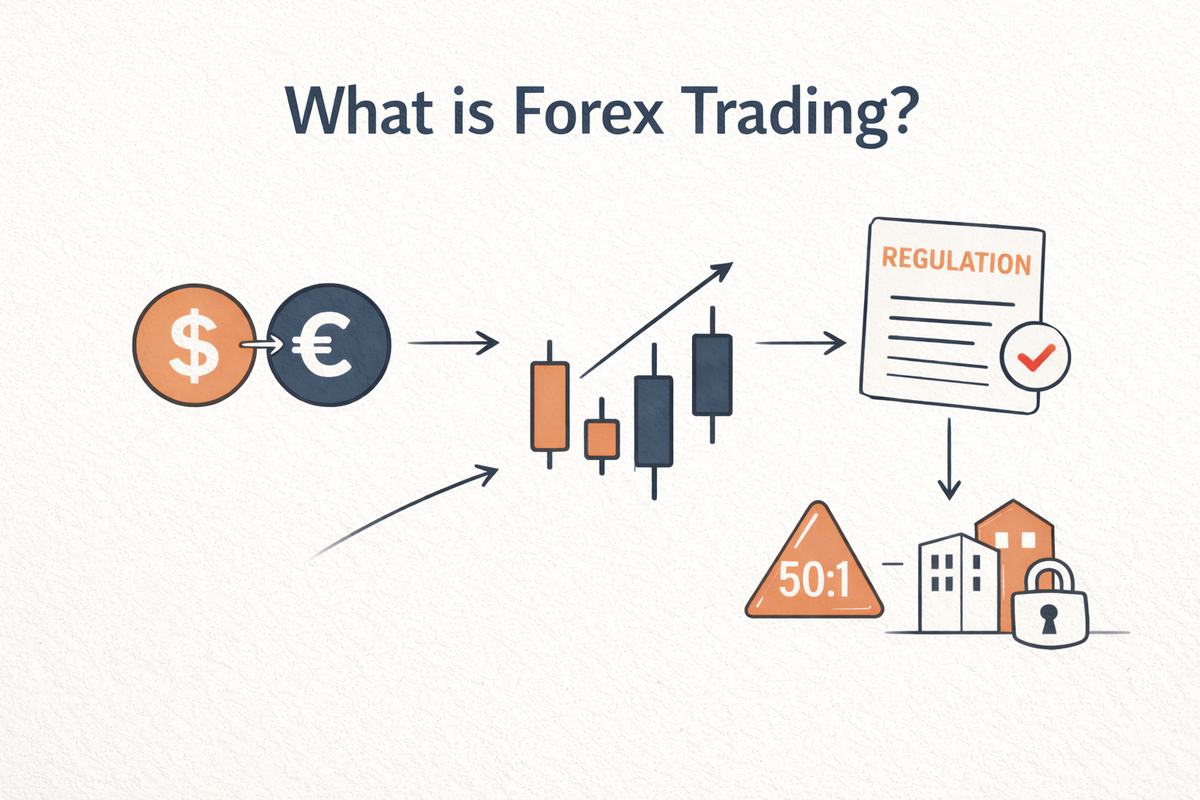
What is Forex Trading?
At its core, forex trading involves exchanging one currency for another in the hopes that the price will change in your favor. Currencies are always traded in pairs — for example:
- EUR/USD (Euro vs U.S. Dollar)
- GBP/USD (British Pound vs U.S. Dollar)
When you buy a currency pair, you’re buying the base currency (e.g., EUR) and selling the quote currency (e.g., USD). You profit if the base currency strengthens against the quote currency — and you lose money if the opposite happens.
How Does Forex Trading Work?
Several factors influence currency price movements, including:
- Interest rates
- Inflation
- Economic reports
- Global geopolitical events
Traders monitor these events and use tools like technical analysis or fundamental analysis to make trading decisions.
Why is Forex Trading Popular?
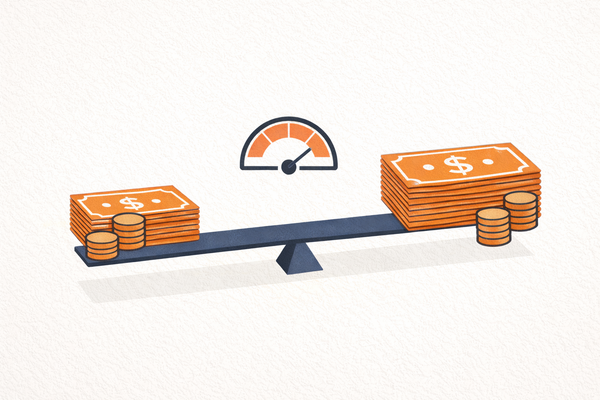
One of the main attractions of forex trading is leverage — which lets you control a large trade size with a relatively small investment. For example, using 50:1 leverage, you can control $50,000 with just $1,000 of your own money.
✅ Pros:
- High liquidity
- Open 24/5
- Low starting capital
⚠️ Cons:
- Leverage can magnify losses
- Requires strong risk management
Risk Management is Crucial
While leverage can boost potential profits, it also increases your risk. That’s why beginners should:
- Never risk more than 1–2% of their trading capital per trade
- Always use stop-loss orders
- Understand that losses are a part of trading
Is Forex Trading Legal in the USA?
Yes, forex trading is legal in the U.S., but it’s strictly regulated.
U.S. Forex Regulators:
- Commodity Futures Trading Commission (CFTC)
- National Futures Association (NFA)
To protect yourself from scams or unfair practices, always choose a regulated U.S. forex broker. These brokers must follow strict rules regarding leverage, capital requirements, and customer protection.
How to Start Forex Trading in the USA
If you’re new to forex, follow these steps:
- Open a Demo AccountPractice trading with virtual money to build confidence.
- Learn the BasicsUnderstand currency pairs, pip values, and how orders work.
- Study Analysis Methods
- Technical Analysis (charts, indicators, trends)
- Fundamental Analysis (economic news, interest rates)
- Start SmallUse low leverage and trade micro or mini lots at first.
Final Thoughts: Is Forex Trading Right for You?
Forex trading is not a get-rich-quick scheme. Success requires education, discipline, and patience. With the right strategy and mindset, it can become a sustainable skill that grows over time.
🎯 Pro Tip: Focus on consistency and learning rather than chasing fast profits.
📣 Ready to Begin?
Start your journey by opening a demo account with a CFTC-regulated broker, and practice trading without risking real money.